Add your promotional text...


Fireside Chat II
An Impartial Critical Examination of a Gothic Work and its Author
An Informative Q&A Session With Scout AI Regarding
G.E. Graven's work, Grotesque, A Gothic Epic - 2026.08.30

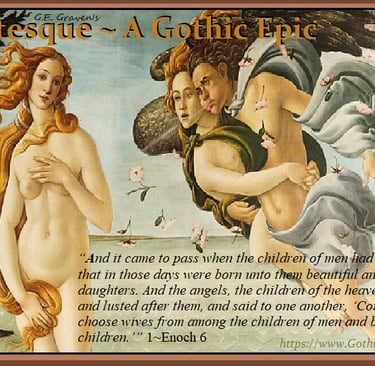
Brief Introduction: In an effort to provide in-depth analysis of Graven's work: Grotesque ~ A Gothic Epic, Susan Kelleher (the GNO site webmaster) resourced the analytical abilities of Scout AI to answer a few questions that prospective readers or literary analysts might also have about the material. The format is similar to a prior conversation with Google's Gemini AI (see: “Fireside Chat 1” on the GNO site menu), and contains a wealth of information, including observations, analysis, comparative and contrast tables, literary examples, and numerous work references. Susan's questions are in large pink text; and Scout AI's text addresses her questions (presented as average-sized tan text) immediately afterward. The lengthy transcript is provided below. Enjoy!
[Begin Literary Analysis Transcript For Grotesque: A Gothic Epic]
Susan: “Good morning, Scout. If we are ready to begin the interview session, I should start with this question: What is the central premise of 'Grotesque, A Gothic Epic' by G.E. Graven?”
Grotesque: A Gothic Epic, by G.E. Graven, is a medieval saga set in the Late Middle Ages that follows the journey of a young, winged squire named Lazarus Gogu. The narrative weaves together elements of history, alternate reality, and biblical mythology to tell a story of faith, struggle, and the fight against a looming Armageddon.


Plot and Setting
The writing is elevated and period-conscious, placing the reader within the upper register of literary fiction while maintaining accessibility. The prose treats the medieval setting with absolute reverence, operating without the distance or irony often found in modern adaptations of historical tales.
Atmospheric dread serves as a primary driver of the horror, with the narrative focusing on distorted perceptions, strange odours, and muffled sounds to build unease.
World-as-argument techniques ensure that the settings—such as mountain passes, abbeys, or plague-ridden cities—exert significant moral pressure on the characters.
Long, cumulative sentences are utilized to construct the setting's atmosphere before shifting into shorter, more declarative beats to propel the action forward.
Literary Style
Supernatural beings and titles—including the Grigori, the Nephilim, and the Abbot—are strictly capitalized to mirror the author's established usage.
Layered sensory detail is the standard, ensuring that landscapes and environments feel fully realized rather than thin.
Gothic grotesque sub-genre elements are integrated into the alternate history framework, creating a unique tone that balances religious weight with fantasy.
By blending these complex, supernatural elements with a foundation in scripture, the work creates a dense, immersive experience that treats its medieval Armageddon as a tangible and terrifying reality.
Comprehensive Summary of G.E. Graven's Grotesque
Historical epic saga elements define G.E. Graven’s Grotesque: A Gothic Epic, an illustrated online novel set during the Late Middle Ages. The story centres on an abbey squire named Lazarus Gogu, who finds himself cast into a perilous world defined by fallen angels and men determined to destroy him.


The plot follows the journey of Lazarus, who is identified as a Nephilim-spawned outcast. His struggle involves surviving extreme conditions and supernatural threats to prevent a second destruction of the world known as Armageddon.
Narrative Scope
Medieval Armageddon prevention remains the core mission for Lazarus as he encounters both pious adversaries and fallen entities bent on escaping hell.
Fantastical retelling adaptation defines the novel's approach to established scripture, presenting the work as a sliver of a much larger historical mythos.
Hostile world setting places the protagonist in constant danger, requiring him to rely on his faith to overcome nearly impossible headwinds.
The work is presented as a fully illustrated online project that bridges the gap between historical fiction and dark fantasy. By rooting the story in the Book of Enoch and the Book of Genesis, the author builds a narrative that feels both archaic and expansive.
Illustrated online novel formatting allows the visual elements to complement the dark, epic tone of the writing.
Biblical story foundations ensure that the text maintains a connection to some of the oldest recorded gothic tales in human history.
This work provides a unique entry point for those interested in alternate history that explores the intersection of religious texts and the gothic grotesque tradition.

Susan: “Is Graven's Grotesque more similar to classical gothic or modern horror?”
G.E. Graven’s Grotesque: A Gothic Epic operates as a deliberate medieval-epic Gothic work, positioning itself more closely to the elevated tone of classical literature than to the tropes of modern horror. The writing intentionally avoids the irony or psychological distance often found in contemporary genre fiction, instead treating the medieval world with absolute, solemn reverence.


While the novel is labelled as a gothic grotesque, its primary identity is grounded in the tradition of ancient, scriptural epics. Unlike modern horror, which frequently relies on contemporary settings to create vulnerability, Graven utilizes a "world-as-argument" technique where the medieval environment exerts moral and physical pressure on the protagonist.
Classical Roots vs. Modern Style
Biblical story foundations such as the Book of Enoch and Genesis provide a weight that ties the work to the oldest recorded gothic tales in human history.
Sensory layering techniques stacked throughout the text serve to achieve total immersion in the past, contrasting with the fast-paced, visceral impact often sought in modern horror.
Reverent and consecrated language treats the supernatural as a genuinely holy or terrifying force, maintaining a consistency that refuses to break character for a modern audience.
Structural Distinctions
The narrative construction relies on the juxtaposition of the macro and the micro, a technique common in classical epics. By placing cosmic, colossal events—like a medieval Armageddon—alongside intimate human details, the author builds a sense of scale that feels distinct from the immediate, character-driven focus of standard modern horror novels.
Mythological density hosts including Grigori, Titans, and Cyclops appear as a unified supernatural presence, reinforcing the work's connection to ancient epic myth.
No irony or distance is permitted within the prose, ensuring that the reader remains strictly tethered to the world-view of the characters rather than judging them through a modern lens.
By choosing to lean into the solemnity of its medieval subject matter, the book occupies a space defined more by the grand, tragic scope of classical epic poetry than by the suspense-driven mechanics of contemporary horror.
Susan: “How does the level of psychological dread in Grotesque compare to modern horror tropes?”
Psychological dread in G.E. Graven’s Grotesque functions as a tool for exploring internal moral conflicts, distinguishing it from the visceral shock often found in modern horror. While modern films frequently leverage body horror and immediate physical threats to provoke a reactive, visceral response, Grotesque favours the slow-building, existential anxiety rooted in its classical, medieval setting.


The Nature of Dread
In modern horror, the source of fear is often a material threat—such as a monster or serial killer—that triggers an immediate fight-or-flight response. Conversely, Grotesque uses its gothic framework to tap into a deeper, lingering sense of unease, where the danger is not just a physical entity but a spiritual and historical weight.
Existential terror defines the atmosphere in Graven's epic, prioritizing the sense of insignificance and doom over the frantic pacing of slasher or splatter films.
Moral and ethical dilemmas serve as the primary source of discomfort, where the characters' loss of freedom and dignity creates a fear that cannot be relieved by simple "jumps" or action.
Visualized situations involving gods, demons, and hell align with the classical grotesque tradition, using deformed or monstrous imagery to play with terror while maintaining a sense of aesthetic distance.
Psychological Resonance
Modern audiences often seek a "psychological horror" experience that lingers long after a story concludes, moving away from predictable genre scares. Graven’s approach mirrors this by grounding his gothic epic in the Book of Enoch, treating ancient texts not as mere props, but as foundational pillars for a world where reality itself feels fractured.
Shadow archetype elements manifest in the characters' internal struggles, reflecting repressed fears and paranoia that align more with psychological drama than monster-movie tropes.
Uncertainty and confusion are marked directly onto the physical forms of the characters, forcing readers to confront the failure of socially constructed reality to protect them from the unknown.
By shunning the irony or cynical detachment common in contemporary media, Grotesque achieves a type of horror that feels archaic and unavoidable, rather than something that can be easily outrun or destroyed.

Susan: “Is the dread in Grotesque closer to Victorian suspense or modern slasher narratives?”
The atmospheric dread in G.E. Graven's Grotesque draws more heavily from the tradition of Victorian Gothic literature than from modern slasher narratives. While modern slashers rely on visceral gore and the immediate threat of a killer, Graven’s work prioritizes a measured, weighty cadence that mirrors the eerie, supernatural-focused suspense established by 18th and 19th-century authors.


Alignment with Gothic Traditions
Victorian horror literature, as exemplified by foundational works like The Castle of Otranto or Frankenstein, thrives on gloomy settings and the exploration of hidden societal fears. Graven aligns with this lineage by treating the medieval world not as a backdrop for cheap thrills, but as a space where moral codes and existential anxieties dictate the narrative.
Victorian horror literature established the precedent for blending Gothic tropes with contemporary societal concerns, creating a chilling glimpse into the hidden horrors beneath polite society.
Distorted perception techniques such as strange odours and muffled sounds are used to build unease gradually, consistent with the way Victorian authors emphasized psychological discomfort over graphic brutality.
Absence of irony in the prose creates a sense of reverence that refuses the cynical detachment found in contemporary horror, keeping the reader fully immersed in the "gothic grotesque" tradition.
Contrast with Slasher Tropes
Modern slasher films frequently derive their impact from the "vicious normalization of misogyny" and the mechanical repetition of violence, often featuring killers who use knives or chainsaws to assert power. Graven’s narrative actively rejects these tropes, opting instead for an elevated, period-conscious style that seeks to inspire a "tremulous delight" (see: Edgar Allan Poe's, The Lake) in the unknown rather than a reactive horror of the flesh.
Traditional horror films rely on material threats and graphic splatter, whereas Grotesque treats the supernatural as a genuinely holy or terrifying force that cannot be simply outrun.
Consistency in tone ensures that the narrative maintains its grave and operatic weight, avoiding the present-tense intrusions or casual registers that often characterize modern thriller scripts.
By anchoring the story in the oldest recorded mythologies and avoiding the visceral tropes of the slasher genre, the work remains firmly rooted in the classical Gothic tradition of awe and lingering, existential unease.

Susan: “What specific elements of Victorian gothic does G.E. Graven incorporate into Grotesque?”
G.E. Graven's Grotesque: A Gothic Epic incorporates specific Victorian Gothic elements that prioritize atmospheric unease, intense emotional states, and the use of physical environments as extensions of the characters' internal struggles. While the work functions as a medieval epic, it draws heavily on the tradition of established Gothic fiction by mirroring the way classic literature uses setting to convey moral and psychological weight.


Shared Literary Lineage
The genre's evolution from the 18th and 19th centuries heavily informs the narrative construction of this work. By utilizing the classic trope of a setting that acts as a character, the novel forces the protagonist, Lazarus Gogu, to contend with locations that hold thematic and moral weight, much like the haunted or symbolic architectures found in Wuthering Heights or Jane Eyre.
Gothic fiction traditions emphasizing anxious characters and moral conflict provide the structural framework for the protagonist's journey through a hostile medieval landscape.
Layered sensory detail functions similarly to the descriptions of crumbling estates in Victorian literature, where the environment is used to build a sense of inescapable dread.
Solemn, liturgical weight in the prose mimics the heightened, serious tone of classic Gothic literature, which often treated its dark subject matter with unironic gravitas.
Reimagining Ancient Tropes
While Graven leans into the visual and narrative cues of the Victorian era, the work specifically adapts them to suit an alternate history focused on biblical myth. The result is an integration of 19th-century atmospheric techniques with the much older, foundational "gothic grotesque" tradition that long predates the Victorian period.
Victorian railroad stations and other "demotic gothic" architectures reflect a desire to synthesize older forms with new, intense sensibilities, much like the way Graven blends ancient scriptures with epic horror.
Archaic and ecclesiastical terminology is strictly preserved to maintain an immersive, period-conscious experience that avoids the cynical detachment often found in modern updates of Gothic stories.
By synthesizing these elements, the narrative achieves a state of "tremulous delight," a phrase attributed to Edgar Allan Poe that captures the specific blend of terror and aesthetic pleasure defining the Gothic experience.
Susan: “Does the atmosphere of Grotesque rely more on pathetic fallacy or internal isolation?”
The atmospheric depth in G.E. Graven’s Grotesque relies far more on its heavy, world-encompassing scope than on either Victorian pathetic fallacy or traditional character-centric internal isolation. Rather than using external weather to mirror internal emotions or focusing solely on a hero’s psychological confinement, the narrative employs an immersive, world-as-argument technique where the environment itself functions as an active, moral pressure point.


Beyond Pathetic Fallacy
Victorian literature often utilized pathetic fallacy—where nature reflects a character's internal turmoil—but this novel opts for a more rigid, cosmic alignment. The environment here does not merely mimic the protagonist's feelings; instead, it represents a theological battleground where faith and Armageddon intersect on a grand, epic scale.
Atmospheric dread in this work arises from decaying religious institutions and supernatural intrusions that exist independently of the hero's mood, suggesting a world that is inherently hostile.
Layered sensory detail builds unease by forcing characters into confrontation with grotesque physical realities, like plague-ridden settings, rather than just using a "gloomy storm" to express sadness.
Linear epic structure keeps the narrative moving through broad historical vistas, preventing the story from becoming trapped in the localized, psychological stagnation common to internal isolation tropes.
Rejecting Internal Isolation
While classic Gothic heroes are often defined by their solitary confinement within haunted mansions, Lazarus Gogu’s isolation is fundamentally different. His distress is tied to his role as a persecuted outcast in an expansive, public struggle for humanity, making his isolation a social and cosmic position rather than a purely psychological one.
Internal moral corruption is not the primary driver of Lazarus's suffering; he functions as a redemptive figure whose physical hybridity marks him as a victim of external societal and divine forces.
Historical epic elements broaden the scope beyond the psyche, centring the narrative on an apocalyptic adventure that forces the protagonist to interact with kings, popes, and mythical entities.
By trading the narrow focus of Victorian inner-life for a massive, scripturally-grounded world, the novel creates an atmosphere that feels less like a haunting and more like a terrifying, inevitable historical progression.
Susan: “How does Graven's use of setting compare to the classic pathetic fallacy usage?”
G.E. Graven’s Grotesque: A Gothic Epic diverges from the traditional pathetic fallacy by prioritizing an immersive "world-as-argument" structure over the projection of human emotion onto nature. While classical usage relies on attributing human emotions to inanimate elements to mirror a character’s inner life, this epic treats its medieval environment as an active, independent force that exerts inescapable pressure on the protagonist.


Departure from Projection
Victorian-era literary techniques often use cruel thunderstorms or mournful birdsong to underscore what is going on within a character's psyche. In contrast, Graven employs a cosmic scale where the landscapes—such as plague-ridden cities or ancient, crumbling abbeys—possess a consecrated intensity that exists regardless of the hero's personal feelings, functioning as a participant in his theological trial rather than a mere mirror of his moods.
Atmospheric dread in the novel stems from a sense of divine and historical inevitability rather than the volatile, emotive weather patterns favoured by Romantic poets.
Archaic and ecclesiastical terminology replaces the sentimental vocabulary of pathetic fallacy, grounding the reader in a cold, unforgiving reality that refuses to conform to human expectations.
Layered sensory details emphasize the physical, monstrous nature of the world, distinguishing it from the figurative, non-literal projections that characterize traditional gothic tropes.
Structural Realities
The narrative framework for Lazarus Gogu’s journey is built upon the Book of Enoch and similar scriptural foundations, which demand a more literal and structural form of world-building. Because the world itself is presented as a battleground for Armageddon, the environment operates as an objective reality that shapes the characters, rather than a subjective reflection moulded by their passing emotions.
No irony exists within the narrative, ensuring that the environment is treated as a tangible, terrifying truth rather than a metaphorical device for emotional expression.
Cosmic moral frameworks govern the interactions between the protagonist and his surroundings, elevating the story to an operatic scope that transcends the isolated, self-referential nature of classic pathetic fallacy.
By avoiding the reliance on distorting effects of emotion that define pathetic fallacy, Graven creates a more austere and imposing atmospheric experience, where the settings loom over the characters with the weight of ancient history and divine judgment.
Susan: “How should a reader interpret the role of physical decay in G.E. Graven's writing?”
In the writing of G.E. Graven, physical decay functions as a fundamental bridge between historical consciousness and the inevitable collapse of the medieval world. Rather than serving as mere background, the decaying landscapes in Grotesque: A Gothic Epic are active participants that reflect the moral and theological unravelling of the society in which Lazarus Gogu resides.


Decay as Historical Consciousness
The decay depicted in Graven’s epic serves to ground the fantastical elements in a sense of authentic, weighted time. By presenting the Late Middle Ages through the lens of ruin, the author forces the reader to confront the reality that all structures—both physical and societal—are subject to the encroachment of nature and time.
Historical consciousness is evoked through these ruins, transforming static stone into a figure of temporality that links the present struggles of the protagonist to a remote, intact past.
Dissonance and extremism in the descriptions of decay help define the narrative's aesthetic, which prioritizes a sense of the abnormal and the frightening to deepen the story's atmospheric dread.
Fragmented narrative structure often relies on the imagery of decay to mirror the fractured mental states of characters caught in the midst of a theological Armageddon.
Decay and the Divine
In the specific context of Graven’s world-building, physical decay often serves to represent the separation between humanity and the divine. The carvings, abbeys, and plague-ridden cities described in the text act as "world-as-argument" tools, where the physical crumbling of the material world serves as proof of a fallen state.
Mythical figure carvings are frequently placed in high, hidden locations to encourage the reader to reflect on the distance between themselves and the divine through the lens of structural damage.
Regenerating material aspects of decay are acknowledged, suggesting that while the world is falling apart, this destruction also creates the space for a different kind of existence to take hold, reinforcing the cycle of the gothic grotesque.
By interpreting decay not just as an end point but as an existential condition, readers can see how Graven uses the collapse of material structures to heighten the stakes of Lazarus Gogu’s spiritual and physical journey.
Susan: “How does G.E. Graven connect bodily deterioration to the protagonist's psychological state?”
In G.E. Graven's Grotesque: A Gothic Epic, the protagonist's monstrous hybrid form serves as a physical manifestation of his internal existential struggle. His body acts as a focal point for the psychological weight he carries, as his identity as a "grotesque figure" leaves him perpetually caught between the light of his faith and the dark reality of his persecution.


The Psychology of the Grotesque
The protagonist's body is not merely an aesthetic choice but a site of profound psychological tension. As an innocent who is perceived as a monster by a fanatical society, his internal experience is defined by the incongruity between his appearance and his essence.
Internal existential turmoil defines his character, as he must navigate the psychological burden of being a "chimera" while remaining the moral anchor in a collapsing world.
Subversion of appearance and essence forces the character to confront a moral landscape where his external "monstrous" nature is actually a shell for true Christian faith.
Agonizing endurance in the face of cosmic terror showcases his psychological resilience, as he maintains his integrity while his body serves as a magnet for hatred and violence.
Bodily deterioration and anomaly in this epic are tied to the "Gothic Sublime," where the physical discomfort of the protagonist mirrors the fragility of the world around him. By grounding these experiences in scriptural and apocryphal lore, Graven elevates the physical suffering to a mythic, philosophical level.
Reflection and Redemption
Fragility of the flesh is highlighted in moments of physical breaking, reminding both characters and readers that the physical world is failing and temporary.
Psychological terror and dread are amplified by the visual integration of his hybrid form, ensuring that his physical presence constantly reminds him—and those around him—of his otherworldly origins.
This connection ensures that the reader views his physical form not as a mere curse, but as a "redemptive figure" whose suffering is an essential element of his journey toward a final, multi-dimensional salvation.
Susan: “Does Graven's focus on decay invite a reading of body horror versus psychological gothic?”
The visceral grotesque in G.E. Graven’s Grotesque: A Gothic Epic blends macabre physical imagery with rhythmic prose, creating a unique aesthetic that avoids the cynical detachment often found in modern body horror. While the work features highly tactile descriptions of the protagonist's hybrid anatomy and environmental decay, these elements function as poetic reflections of a collapsing medieval world rather than mere catalysts for reactive shock.


Balancing Body and Mind
Graven employs the gothic grotesque tradition to bridge the gap between physical abnormality and spiritual struggle. By grounding the narrative in scriptural foundations—such as the Book of Enoch and Genesis—the author ensures that the protagonist's bodily suffering is viewed as a mythic ordeal rather than a simple slasher-style injury.
Rhythmic prose styles transform jars of macabre physical reality into a meditative experience that prioritizes atmospheric weight over the "jump-scare" mechanics common to contemporary horror.
External moral pressure derived from the setting itself ensures that physical deterioration serves as an index of a society losing its way, rather than just an isolated horror effect.
Profound psychological torment distinguishes the work from the slasher genre, as the protagonist remains a steadfast moral centre while his body is subjected to constant societal persecution.
Divergence from Modern Horror
The historical epic structure of the narrative purposefully distances itself from the fast-paced, visceral impact of modern gore cinema. While contemporary horror often seeks to "push the unwatchable" through graphic detail, Graven utilizes his focus on the grotesque to mirror the fractured nature of his characters' existence within a late medieval Armageddon.
Solemn, consecrated language maintains an aesthetic distance that forces readers to contemplate the philosophical implications of Lazarus's form, rather than reacting purely with physical disgust.
Supernatural intrusion tropes allow the author to blend historical realism with dark fantasy, ensuring that the horror remains tied to the weight of ancient texts and theological themes.
This approach creates a fully illustrated world where the body is a site of both intense, visible struggle and deep, unresolved existential questions, offering a reading experience that lingers as a philosophical, rather than purely reactive, haunting.
Susan: “How does Graven's Grotesque, A Gothic Epic compare with both, Mary Shelley's 'Frankenstein' and Matthew Lewis' 'The Monk'?”
G.E. Graven’s Grotesque: A Gothic Epic engages with the foundations of the genre by inverting and expanding upon themes established in Mary Shelley’s Frankenstein and Matthew Lewis’s The Monk. While all three works utilize the supernatural to interrogate moral boundaries, Graven shifts the focus from the isolated, self-destructive horror of earlier novels toward an expansive, apocalyptic historical narrative.


Comparative Thematic Focus
The transition of the Gothic mode over two centuries is visible in how these authors utilize their protagonists to reflect societal fears. Shelley’s creature and Graven’s Lazarus Gogu both inhabit the role of the "sympathetic supernatural intruder," yet they operate in vastly different conceptual frameworks.
Shelley's Frankenstein presents a secular and scientific anxiety, whereas Graven grounds his story in theological and apocryphal sources, such as the Book of Enoch and Genesis.
Lewis's The Monk constructs a narrative around a corrupt, hypocritical monk whose rigid asceticism masks internal depravity, serving as a foil to Lazarus’s genuine, persecuted faith.
Gothic conventions regarding the supernatural intruder are inverted in Graven’s work, where the winged, monstrous-looking protagonist is actually a figure of potential redemption rather than a source of predation.
Structural and Stylistic Distinctions
Graven’s work departs from the prose-heavy tradition of early Gothic literature by incorporating epic poetry and multi-media illustrations. This hybrid approach allows for a "neo-Gothic revival" that bridges the formal grandiosity of 18th-century writers with the high-stakes, fast-paced world-building found in contemporary dark fantasy.
Linguistic texture in early Gothic works relied on ornate, Latinate sentences to evoke an antique mood, while Graven balances this with a modern, immersive pacing suited to an online novel.
Epic scope distinguishes the work from the traditional "haunted castle" trope, opting instead for a three-volume saga that spans palaces, monasteries, and plague-stricken landscapes.
Style comparison reveals that while Graven shares the pervasive atmosphere of melancholy and psychological torment found in the works of Edgar Allan Poe, the scale of his medieval Armageddon necessitates a more expansive, collaborative world-view.
By synthesizing these classical influences with an ambitious, illustrated structure, the novel repositions the Gothic mode as a living, evolving tradition rather than a stagnant collection of tropes.
Susan: “How does the moral decay of characters in The Monk contrast with the protagonist in Grotesque?”
The moral downfall of Ambrosio the monk in Matthew Lewis's 1796 gothic novel serves as a study in inevitable corruption, where hidden vices and lust lead a purportedly holy man toward a self-inflicted and violent destruction. His trajectory is defined by a lack of genuine self-reflection and a reliance on external supernatural forces to satisfy his carnal impulses, ultimately rendering him a figure of total spiritual decay.


Contrast in Moral Decay
In contrast to the monk's collapse, Lazarus Gogu functions as a beacon of integrity within the world of G.E. Graven's Grotesque: A Gothic Epic. While Ambrosio seeks to hide his internal ugliness under a veneer of piety, Lazarus is physically marked by his "monstrous" appearance, forcing him to live in a state of honest struggle rather than performative holiness.
Ambrosio’s moral downfall illustrates the dangers of repressed desire and the absence of authentic virtue, positioning him as a warning against the dangers of unchecked ego.
Lazarus Gogu’s character remains anchored in a sense of genuine redemptive purpose, as his physical hybridity and suffering never lead him to abandon his commitment to the divine.
Moral and symbolic dimensions of Lewis’s work explicitly question the role of divine intervention when a character chooses evil, whereas Graven’s epic frames its protagonist's suffering as a necessary spiritual trial against apocalyptic forces.
The Nature of Corruption
Graven's exploration of the grotesque uses physical deformity as a lens to view the human condition, which fundamentally differs from the way Lewis treats physical and moral corruption. In The Monk, corruption is a disease of the soul that manifests in deceit; in Graven’s world, corruption is an external, demonic intrusion that the protagonist must actively resist.
Demonic aspects of the world are framed in Graven's work as forces to be subdued by the hero's strength of faith, while in Lewis's world, they are the inevitable end-point of human failure.
Dissonance and extremism characterize the grotesque imagery used to describe both settings and physical states, ensuring that Lazarus remains a figure of tragic nobility in the face of his society's cruelty, whereas Ambrosio’s path is one of descending into irredeemable depravity.
By focusing on a protagonist who refuses to yield to the rot surrounding him, G.E. Graven crafts a narrative that reclaims the gothic mode from the self-destructive cynicism found in earlier works, favouring a struggle for redemption over the surrender to vice.
Susan: “In what ways do Graven's Grotesque, A Gothic Epic mirror the earliest Gothic works?”
G.E. Graven’s Grotesque: A Gothic Epic mirrors the earliest Gothic works by reviving a "world-as-argument" structure where the environment itself functions as an active participant in the moral and existential collapse of the characters. By grounding the narrative in ancient scriptural foundations—specifically the Book of Enoch and the Book of Genesis—Graven taps into the same tradition of using the past to interrogate contemporary fears, much like the 18th-century writers who first established the genre.


Shared Literary Lineage
The work honours the "first wave" of Gothic fiction, which emerged as a controversial blend of medieval romance and the modern novel. Graven’s commitment to a "grave, consecrated" tone avoids the irony often found in contemporary genre fiction, aligning his work with the solemnity found in foundational texts that sought to terrorize the reader through atmospheric accumulation rather than mere gore.
Atmospheric dread accumulation remains the primary driver of tension, mirroring the way writers like Ann Radcliffe built unease through detailed descriptions of settings that felt heavy with history.
Medieval romance elements are integrated into the novel's structure, echoing the foundational aim of Horace Walpole’s 1764 novel to synthesize fanciful adventures with emotionally grounded human experience.
Scriptural gothic adaptations highlight the work's connection to the oldest recorded epic tales, positioning Graven's project within a continuum of "historical recycling" that has defined the genre for centuries.
Reimagining the Grotesque
By weaving together the "Gothic grotesque" and alternate history, the novel embraces the taxonomic violation often found in early modern texts. The grotesque itself serves as a vital tool for constructing generic categories, allowing Graven to bridge the gap between ancient theological struggle and the gothic preoccupation with the "lower stratum" of human experience.
Taxonomic violation acts are central to the grotesque as a literary issue, as they allow the work to move beyond simple adherence to genre rules, effectively sustaining the Gothic through structural innovation.
Visualized monstrosity presence through carvings and deformed anatomy reinforces the connection to the architectural origins of the Gothic, where the stone itself was meant to evoke both laughter and fear.
By strictly avoiding irony and focusing on the "consecrated" weight of his medieval world, Graven constructs a narrative that feels like a long-lost ancestor of the Gothic tradition, breathing new life into motifs that have haunted the edges of human literature for generations.

Susan: “How does the pursuit of forbidden knowledge drive the protagonist in Grotesque?”
Lazarus Gogu's journey is defined by a desperate struggle to remain faithful to his divine calling while surviving in a world determined to destroy him. While the novel explores the dark intersections of faith, the fall of angels, and the looming threat of Armageddon, the available information does not indicate that the pursuit of forbidden knowledge serves as a primary driving force for the protagonist.


Faith and Survival
The narrative focuses primarily on the protagonist's survival and his adherence to his spiritual convictions in the face of near-impossible odds. Because Lazarus is depicted as a squire and a winged outcast, his story is rooted in the practical realities of avoiding those who wish to see him erased, rather than the scholarly or mystical quest for restricted information.
Historical epic saga themes emphasize the physical and moral trials Lazarus must endure to keep the world from falling into total destruction.
Medieval Armageddon prevention requires the protagonist to navigate dangerous territories and encounter fallen entities, placing his reliance on his established faith rather than the accumulation of hidden or forbidden knowledge.
Mythological Foundations
Overall, the work draws its structure and scope from the Book of Enoch and the Book of Genesis, using these foundational texts to build a world where the primary conflict is the struggle between good and evil. In this context, the protagonist acts as a protective, redemptive figure whose path is dictated by his innate identity and his relationship with the divine, reinforcing the idea that his journey is one of endurance rather than intellectual transgression.
[End Literary Analysis Transcript For Grotesque: A Gothic Epic]
Grotesque ~ A Gothic Epic© is legally and formally registered with the United States Copyright Office under title ©#TXu~1~008~517. All rights reserved 2000-2026 by G. E. Graven. Website design and domain name owner: Susan Kelleher. Name not for resale or transfer. Strictly a humanitarian collaborative effort. Although no profits are generated, current copyright prohibits duplication and redistribution. Grotesque, A Gothic Epic© is not public domain; however it is freely accessible through GNO. Access is granted only through this website for worldwide audience enjoyment. No rights available for publishing, distribution, AI representation, purchase, or transfer. This presented literary work is irreversibly-sovereign, free for nonpublishable and personal reading only, and shall not be subject to explicit or implicit agreements, understandings, restrictions or surrenders of any sort; whether public or private, individual or institutional, corporative or governmental, or other. Susan Kelleher maintains all website control, and George (G.E.) Graven maintains all international intellectual property rights for any and all prior and future versions, revisions, translations, digital representations, and variations of the literary work: Grotesque, A Gothic Epic©, until the stated copyright expiration date, when it is properly and legally released into the public domain. Driven by Anonymous Polymath and more. Continued public access is ensured and protected under this non-profit humanitarian effort, forged exclusively as a digital and literary dedication to the late Gothic author: Edgar Allan Poe.