Add your promotional text...


Dark Reflections Series Presents: Hugo & Graven
A Classic Compare & Contrast Analysis Of Two Authors' Works
Reflection 5 ~ Victor Hugo's The Hunchback of Notre-Dame



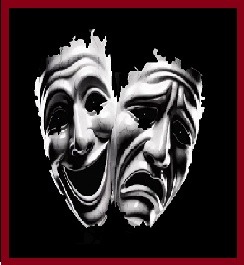
This material is part of a larger non-profit literary collection: Dark Reflections Series, and features work comparison and contrast between between two authors, Victor Hugo (The Hunchback of Notre-Dame) and G.E. Graven (Grotesque: A Gothic Epic).
~*~
G.E. Graven’s Grotesque: A Gothic Epic and Victor Hugo’s The Hunchback of Notre-Dame share a central Gothic concern: society mistakes physical difference for moral corruption. Both works place a visibly “grotesque” male figure within a medieval religious world and use his persecution to criticize fear, superstition, social exclusion, and religious hypocrisy. However, the novels ultimately move in different directions. Hugo’s novel is a tragic Romantic meditation on social injustice, desire, political violence, and the destruction of innocence, while Graven’s work expands the outcast narrative into a mythic and apocalyptic struggle involving fallen angels, Nephilim mythology, faith, and cosmic redemption. The comparison between Lazarus Gogu and Quasimodo is therefore especially revealing: both characters are physically marginalized but morally sympathetic, yet Lazarus possesses a far greater supernatural agency and operates on an epic rather than primarily human scale.
Major Similarities
1. The persecuted “monster” is morally better than many of the people who judge him
The strongest similarity is the contrast between appearance and character.
Quasimodo is physically deformed, deaf, and treated by the public as an object of ridicule or fear. Yet he demonstrates loyalty, courage, tenderness, and self-sacrifice.
Lazarus Gogu is a winged, human-angelic hybrid whose appearance causes others to regard him as monstrous. Nevertheless, he serves as a compassionate and morally centered figure who seeks preservation rather than revenge.
Both characters challenge the Gothic assumption that ugliness signifies evil. Their bodies initially produce fear, but their actions generate sympathy and moral admiration. In each novel, the supposedly “monstrous” figure becomes a test of the humanity of everyone around him.
This inversion is particularly important in Grotesque: Lazarus’s physical grotesqueness is presented not as evidence of inner corruption but as the source of his persecution and as part of his redemptive identity. The work thereby turns the grotesque body into a vehicle for moral critique.
2. Both works connect the outcast protagonist to sacred architecture
Quasimodo is inseparable from Notre-Dame Cathedral. The cathedral is his home, refuge, workplace, and symbolic extension. He is part of its bells, towers, gargoyles, and stone structure. His body appears grotesque to society, but the cathedral’s gargoyles and architectural monsters suggest that the boundary between sacred beauty and physical deformity is unstable.
Lazarus is similarly associated with a medieval religious environment. He is an abbey squire, and Grotesque places him among abbeys, monasteries, castles, ecclesiastical institutions, and other structures associated with medieval Christianity. In both novels, religious architecture functions in two opposing ways:
It provides shelter and spiritual meaning.
It embodies institutional authority, confinement, and social judgment.
The cathedral in Hugo’s novel and the abbeys and monasteries in Graven’s work are therefore not merely backgrounds. They exert moral pressure on the characters and help define how society understands holiness, monstrosity, and power.
3. Both novels criticize religious hypocrisy
Neither work presents religious authority as automatically synonymous with moral goodness.
In Hugo’s novel, the Archdeacon Claude Frollo is a religious authority whose intellectual and spiritual position does not prevent him from becoming obsessive, possessive, and destructive. His outward sanctity contrasts sharply with his internal corruption. Quasimodo, by contrast, is the physically deformed figure who displays greater emotional loyalty and moral integrity.
Grotesque also depicts a hostile world in which pious or fanatical human beings seek to destroy Lazarus because of his appearance. The work’s religious conflict is more cosmological: Lazarus must preserve his faith while facing both human persecution and supernatural evil. Thus, Graven’s treatment of religion is not simply an attack on faith itself. Lazarus’s faith remains a source of endurance and moral direction even when religious institutions or religiously motivated people behave cruelly.
4. Both works explore isolation and the desire for human connection
Quasimodo and Lazarus are both liminal figures: they exist at the boundary between accepted humanity and feared otherness.
Quasimodo is isolated by deformity, deafness, and his dependence on the cathedral.
Lazarus is isolated because he is physically hybrid, spiritually unusual, and hunted by both ordinary humans and supernatural forces.
Their isolation gives both novels emotional force. Each protagonist longs for recognition and meaningful attachment, yet the surrounding society repeatedly confirms his exclusion. The Gothic atmosphere thus emerges not only from darkness, architecture, or supernatural events but also from the psychological terror of being visible to others while remaining fundamentally misunderstood.
5. The novels use the grotesque to expose social prejudice
In both works, “the grotesque” is not merely a visual style. It is a social category imposed upon people who do not conform to conventional ideas of normality.
Hugo uses Quasimodo to expose the cruelty of public spectacle, mob judgment, and social hierarchy. Graven similarly uses Lazarus’s body to question the assumption that physical abnormality implies spiritual danger. The grotesque figure becomes a mirror: the audience’s reaction to him reveals its own cruelty, fear, or capacity for compassion.
Major Differences
1. Hugo’s tragedy is primarily human and social; Graven’s conflict is cosmic and apocalyptic
The most important difference concerns scale.
The Hunchback of Notre-Dame is built around human institutions and relationships:
the cathedral and the city of Paris;
social class and public authority;
Frollo’s obsession with Esmeralda;
Quasimodo’s loyalty;
the conflict between desire, law, religion, and compassion.
Although Hugo’s novel contains Gothic elements, its central tragedy arises from human passions and social structures. The catastrophic consequences are produced largely by human cruelty, obsession, misunderstanding, and political violence.
By contrast, Grotesque places Lazarus within a much larger supernatural conflict. Its world includes fallen angels, Nephilim, Grigori, Titans, Cyclopes, and other mythological beings. The threat is not merely that an individual will be rejected or destroyed; it is the possibility of a medieval Armageddon. Graven therefore expands the Gothic outcast narrative into an historical-apocalyptic epic.


2. Quasimodo is largely confined; Lazarus possesses extraordinary agency
Quasimodo’s power is significant but limited. He is physically strong, courageous, and capable of extraordinary acts of loyalty, particularly in his defense of Notre-Dame and those he loves. Yet his life is constrained by his deafness, his dependence on the cathedral, and his subordination to the people who control his circumstances.
Lazarus, in contrast, is not merely a misunderstood disabled or deformed person. He is a winged hybrid with heightened spiritual awareness and a role in a supernatural conflict. His difference gives him access to realms of perception and action unavailable to ordinary humans. He is therefore not only a victim of prejudice but also an active guardian against forces threatening the human world.
This creates a significant contrast in heroic structure:
Quasimodo’s heroism is protective, intimate, and tragically localized.
Lazarus’s heroism is visionary, sacrificial, and cosmically consequential.
The comparison can be summarized as follows:
Quasimodo protects particular people and places within a hostile society; Lazarus struggles to preserve humanity itself from supernatural annihilation.
3. Quasimodo’s deformity is physical disability; Lazarus’s is supernatural hybridity
Quasimodo’s body is human, although severely deformed. His difference is linked to disability, social stigma, and physical isolation. The horror surrounding him is largely generated by the way other people look at and treat him.
Lazarus’s body occupies a more complicated category. He is a winged grotesque and human-angelic hybrid connected to Nephilim and other scriptural or mythological traditions. His body is not simply an unusual human body; it signals a conflict between human, angelic, monstrous, and divine categories.
Consequently:
Hugo’s novel asks, “Why does society deny humanity to a physically deformed person?”
Graven’s novel asks, “What happens when a being who appears monstrous may possess a uniquely sacred or redemptive nature?”
Both questions concern prejudice, but Graven adds a theological and metaphysical dimension.
4. Hugo emphasizes tragic inevitability; Graven emphasizes redemption and resistance
Quasimodo’s story is deeply tragic. His goodness does not protect him from loss, and his loyalty cannot overcome the destructive forces surrounding him. The novel’s emotional power comes partly from the painful gap between his moral worth and his fate.
Grotesque also contains suffering, persecution, and melancholy, but Lazarus is framed more explicitly as a redemptive or martyr-like hero. He is characterized by endurance, faith, compassion, and resistance to the temptation to answer cruelty with cruelty. Rather than allowing persecution to transform him into a destroyer, the narrative presents him as someone who continues to defend the world that fears him.
This produces a different moral trajectory:


5. Hugo’s principal antagonist is psychologically human; Graven’s antagonists include supernatural powers
Claude Frollo is terrifying because he is recognizably human. His learning, religious authority, sexual repression, jealousy, and obsession become instruments of destruction. Hugo’s Gothic horror emerges from the possibility that respectable institutions and cultivated individuals can conceal intense violence.
Graven’s antagonists include fallen angels and other supernatural beings whose motives operate on a larger metaphysical plane. Their threat is not limited to personal obsession. They represent rebellion against divine order, spiritual corruption, and the danger of cosmic forces entering human history.
This difference changes the nature of evil in each novel:
In Hugo, evil often grows from distorted human desire and institutional power.
In Graven, evil is both human and supernatural, extending from fanaticism and prejudice to fallen celestial beings and apocalyptic designs.
6. The two works differ in form and narrative ambition
Hugo wrote a nineteenth-century historical novel combining Gothic atmosphere, Romantic emotion, social criticism, architectural meditation, and historical commentary. The narrative repeatedly returns to Notre-Dame as both a physical structure and a symbol of French history and cultural memory.
Graven’s work is a fully illustrated online novel and as a historical epic. Its narrative approach combines medieval history, biblical mythology, alternate reality, supernatural warfare, and Gothic imagery. The work also uses shifts between broad historical narration and more intimate, lyrical passages focused on Lazarus. This produces a movement between the macrocosm of cosmic history and the microcosm of individual suffering.
The Role of Architecture
In Hugo
Notre-Dame is almost a character in its own right. The cathedral represents:
medieval civilization;
religious authority;
refuge and imprisonment;
permanence amid human instability;
the merging of beauty and grotesqueness through gargoyles, bells, towers, and stone figures.
Quasimodo’s identity is inseparable from the cathedral. He is both its guardian and one of its living grotesques.
In Graven
Abbeys, monasteries, castles, mountains, and other medieval settings form part of a wider supernatural geography. They are locations where earthly history and invisible spiritual conflict intersect. The setting does not merely preserve the past; it becomes an active pressure on the characters and a stage for the conflict between fallen and redemptive forces.
Thus, Hugo’s architecture is chiefly a symbol of civilization, history, and social power, whereas Graven’s architecture is more directly integrated into a cosmic and mythological landscape.
Different Uses of the Supernatural
The supernatural also operates differently in the two works.
In The Hunchback of Notre-Dame, the Gothic effect often arises from the appearance of the supernatural, the uncanny atmosphere of the cathedral, prophetic or superstitious interpretations, and the sense that the medieval world is governed by forces its inhabitants do not fully understand. Yet the novel remains strongly focused on human psychology and historical society.
In Grotesque, supernatural beings and events are central to the literal plot. Fallen angels, Nephilim-related mythology, and other grotesque creatures are not merely symbolic possibilities. They participate in an active metaphysical conflict. The supernatural therefore has a more direct and expansive narrative function.
Different Concepts of Faith
The two novels are also distinct in their treatment of faith.
Hugo’s approach
Hugo is deeply interested in the authority of the Church, but his treatment is often critical and politically charged. Religious authority can become entangled with repression, desire, hierarchy, and abuse. The novel asks whether institutional religion truly reflects compassion and justice.
Graven’s approach
Graven distinguishes between corrupt or fanatical religious actors and faith as a source of moral strength. Lazarus’s faith helps him endure persecution and resist hatred. The novel’s supernatural mythology is also explicitly connected to scriptural and apocryphal traditions, giving its religious framework a more literal and cosmological role.
This results in a useful contrast:
Hugo emphasizes the danger of religious power without compassion.
Graven emphasizes the possibility of faith surviving and opposing religious hypocrisy and supernatural evil.
Overall Interpretation
The two works can be read as variations on the same Gothic structure:
A medieval world is governed by powerful institutions.
A physically unusual figure is treated as monstrous.
Society confuses external appearance with inner morality.
Religious or political authorities fail to protect the vulnerable.
The outcast reveals the moral failure of the supposedly “normal” world.
But the conclusions differ. Hugo’s novel uses the outcast figure to expose the tragedy produced by human desire, social prejudice, and historical power. Graven uses the same basic figure to construct a larger myth of spiritual endurance and cosmic responsibility. Quasimodo is a tragic human sanctuary within the cathedral; Lazarus is a supernatural guardian standing between humanity and apocalypse.
Conclusion
Grotesque: A Gothic Epic and The Hunchback of Notre-Dame are closely related through their shared concern with the sympathetic grotesque: the apparently monstrous figure whose inner morality exceeds that of the people who condemn him. Both novels connect deformity with social isolation, sacred architecture, religious hypocrisy, and the Gothic tension between beauty and horror.
Their greatest difference lies in scope and resolution. Hugo’s The Hunchback of Notre-Dame remains principally a tragic story of human beings trapped by desire, prejudice, institutional power, and historical circumstance. Graven’s Grotesque transforms the same Gothic concern into an epic religious fantasy in which Lazarus’s deformity marks not moral corruption but a distinctive capacity for spiritual vision, compassion, and defense. Quasimodo embodies the tragedy of society’s failure to recognize humanity in the outcast; Lazarus embodies the possibility that the outcast may become the world’s protector and redeemer.


Grotesque ~ A Gothic Epic© is legally and formally registered with the United States Copyright Office under title ©#TXu~1~008~517. All rights reserved 2000-2026 by G. E. Graven. Website design and domain name owner: Susan Kelleher. Name not for resale or transfer. Strictly a humanitarian collaborative effort. Although no profits are generated, current copyright prohibits duplication and redistribution. Grotesque, A Gothic Epic© is not public domain; however it is freely accessible through GNO. Access is granted only through this website for worldwide audience enjoyment. No rights available for publishing, distribution, AI representation, purchase, or transfer. This presented literary work is irreversibly-sovereign, free for nonpublishable and personal reading only, and shall not be subject to explicit or implicit agreements, understandings, restrictions or surrenders of any sort; whether public or private, individual or institutional, corporative or governmental, or other. Susan Kelleher maintains all website control, and George (G.E.) Graven maintains all international intellectual property rights for any and all prior and future versions, revisions, translations, digital representations, and variations of the literary work: Grotesque, A Gothic Epic©, until the stated copyright expiration date, when it is properly and legally released into the public domain. Driven by Anonymous Polymath and more. Continued public access is ensured and protected under this non-profit humanitarian effort, forged exclusively as a digital and literary dedication to the late Gothic author: Edgar Allan Poe.