Add your promotional text...


Dark Reflections Series Presents: Hoffmann, Poe & Graven
A Classic Comparison Analysis Of Three Authors
Reflection 2 ~ E. T. A. Hoffmann, E. A. Poe & G. E. Graven



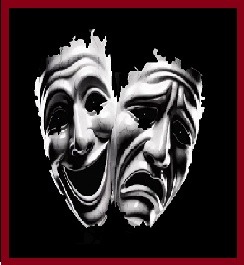
This material is part of a larger non-profit literary collection: Dark Reflections Series, and features work comparison and contrast between author styles: E.T.A. Hoffmann, Edgar Allan Poe and G.E. Graven.
~*~
G.E. Graven’s Grotesque: A Gothic Epic shares with both E.T.A. Hoffmann and Edgar Allan Poe an interest in the uncanny, distorted perception, supernatural intrusion, and the uneasy boundary between beauty and horror. However, Graven expands those traditionally intimate and psychologically concentrated Gothic concerns into a medieval, theological, and apocalyptic epic.
At a glance:
Comparison with E.T.A. Hoffmann
Hoffmann’s Gothic imagination frequently makes reality unstable. His characters may move between ordinary life, dreams, hallucinations, supernatural forces, and artistic visions without a completely secure boundary separating them. The resulting uneasiness comes not only from monsters or ghosts but from the possibility that the human mind cannot reliably determine what is real.
Grotesque shares this fascination with altered perception. Lazarus is not an ordinary observer: his heightened senses allow him to perceive spirits, specters, angelic beings, and remnants of the unseen world. The novel therefore presents reality as layered rather than merely physical. Its supernatural world is not simply an interruption of ordinary life; it is a hidden dimension that Lazarus can perceive more fully than other people. This expanded perception is described as a means of viewing “the spiritual realm” beyond ordinary mortal senses.
The difference is that Hoffmann often leaves the reader uncertain about whether a supernatural event is objectively occurring or is being filtered through an unstable consciousness. Grotesque, by contrast, generally treats its supernatural forces as real within the novel’s cosmology. Its angels, demons, spirits, and grotesque beings belong to a coherent mythological and scriptural framework. The novel’s uncertainty concerns the meaning and moral consequences of these forces more than their mere existence.


Hoffmann-like qualities in Grotesque
The uncanny: familiar human and religious forms become strange, threatening, or distorted.
Blended realities: historical events coexist with spirits, demons, visions, and mythological beings.
Grotesque hybridity: Lazarus’s body combines human, angelic, and monstrous qualities.
The artistically strange: horror is presented with elaborate visual and imaginative detail rather than as simple shock.
Psychological estrangement: Lazarus is separated from ordinary society because he does not fit accepted definitions of the human.
Yet Graven gives these Hoffmann-like elements a more definite moral and epic direction. Rather than ending primarily in ambiguity or psychological disintegration, Lazarus’s journey develops toward endurance, faith, and possible redemption.
Comparison with Edgar Allan Poe
The connection with Poe is more direct. Grotesque is dedicated to Poe, and its atmosphere reflects several recognizably Poe-like qualities: macabre imagery, corrupted landscapes, death-haunted settings, spectral figures, grotesque bodies, and a fascination with the terrible beauty of decay.
Poe usually compresses these effects into a short story or poem. His power often comes from concentration: a single voice, a single obsession, a single room, a single crime, or a single descent into madness. The reader is placed inside an intensely subjective mental state. In works such as The Tell-Tale Heart, The Black Cat, The Fall of the House of Usher, and The Raven, psychological pressure is more important than broad adventure.
Grotesque adopts Poe’s atmosphere but enlarges its scale. It uses plague, death, spectral manifestations, bodily corruption, night landscapes, and grotesque supernatural beings, yet places them within a much broader historical and mythological narrative. The novel’s horrors are not confined to one tormented narrator or household. They threaten entire communities and, ultimately, the structure of the world itself.
The major difference from Poe
The clearest distinction is between psychological concentration and epic expansion.
Poe’s protagonists are often trapped within their own minds. Their terror arises from guilt, obsession, memory, paranoia, or the inability to escape an inward darkness. Grotesque certainly contains psychological suffering, but Lazarus’s primary struggle is not simply to understand his own mind. He must survive persecution, confront supernatural forces, preserve his moral identity, and respond to a catastrophe of religious and cosmic proportions. The comparison has been summarized as Poe’s emphasis on individual madness, guilt, and subconscious horror contrasted with Graven’s emphasis on external action, faith, persecution, and apocalyptic survival.
In that sense, Graven transforms Poe’s private nightmare into a public and cosmic nightmare.
The treatment of the grotesque
Poe and Hoffmann often use the grotesque to unsettle the reader’s confidence in identity, reason, and reality. A beautiful object may conceal corruption; a rational person may become monstrous; and the ordinary world may reveal a disturbing, irrational underside.
Grotesque develops this idea through Lazarus himself. His physical appearance suggests monstrosity, but his moral role complicates the conventional Gothic association between outward deformity and inner evil. He is a persecuted figure rather than a straightforward villain. His body makes him appear threatening to others, while his actions and spiritual commitments reveal sympathy, courage, and a capacity for redemption. This reverses a familiar Gothic pattern: the apparently monstrous being becomes the moral center of the story.
This is where Graven differs from much of Poe’s fiction. Poe’s grotesque figures often embody psychological or moral collapse, whereas Lazarus represents the possibility that the grotesque may be misunderstood rather than inherently corrupt.
Differences in narrative form
Hoffmann and Poe generally work through concentrated prose forms—tales, novellas, sketches, and poems. Their effects depend on economy, suggestive detail, and the gradual intensification of an individual crisis.
Grotesque uses a broader structure:
a historical medieval setting;
multiple locations, including castles, monasteries, and plague-stricken landscapes;
a large supernatural mythology;
battles and journeys;
a conflict involving fallen angels and apocalyptic forces;
a sustained protagonist whose development extends across an epic narrative;
author-created illustrations integrated with the online reading experience.
The result is not simply a traditional haunted-castle story. It combines Gothic horror with historical fiction, theological fantasy, and epic adventure. Its prose retains a formal, atmospheric quality, but it is designed to carry action and world-building as well as inward reflection.
The simplest way to distinguish them
A useful summary would be:
Hoffmann asks whether reality itself has become dreamlike, enchanted, or psychologically unstable.
Poe asks what happens when an individual mind is consumed by terror, guilt, obsession, or death.
Graven asks whether a physically monstrous and socially rejected figure can retain faith and humanity while confronting supernatural and apocalyptic evil.
So Grotesque is Poe-like in atmosphere, Hoffmann-like in its fascination with altered perception and the uncanny, but distinct from both in its epic scope, explicit theological mythology, historical setting, illustrated format, and redemptive treatment of the monster. It takes the claustrophobic Gothic nightmare associated with Poe and the dreamlike supernatural instability associated with Hoffmann, then opens both outward into a medieval cosmic drama.


Grotesque ~ A Gothic Epic© is legally and formally registered with the United States Copyright Office under title ©#TXu~1~008~517. All rights reserved 2000-2026 by G. E. Graven. Website design and domain name owner: Susan Kelleher. Name not for resale or transfer. Strictly a humanitarian collaborative effort. Although no profits are generated, current copyright prohibits duplication and redistribution. Grotesque, A Gothic Epic© is not public domain; however it is freely accessible through GNO. Access is granted only through this website for worldwide audience enjoyment. No rights available for publishing, distribution, AI representation, purchase, or transfer. This presented literary work is irreversibly-sovereign, free for nonpublishable and personal reading only, and shall not be subject to explicit or implicit agreements, understandings, restrictions or surrenders of any sort; whether public or private, individual or institutional, corporative or governmental, or other. Susan Kelleher maintains all website control, and George (G.E.) Graven maintains all international intellectual property rights for any and all prior and future versions, revisions, translations, digital representations, and variations of the literary work: Grotesque, A Gothic Epic©, until the stated copyright expiration date, when it is properly and legally released into the public domain. Driven by Anonymous Polymath and more. Continued public access is ensured and protected under this non-profit humanitarian effort, forged exclusively as a digital and literary dedication to the late Gothic author: Edgar Allan Poe.