Add your promotional text...


Dark Reflections Series Presents: Godwin & Graven
A Classic Compare & Contrast Analysis Of Two Authors' Works
Reflection 8 ~ William Godwin's Caleb Williams



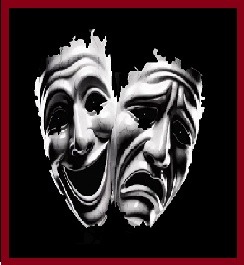
This material is part of a larger non-profit literary collection: Dark Reflections Series, and features work comparison and contrast between between two authors, William Godwin (TCaleb Williams) and G.E. Graven (Grotesque: A Gothic Epic).
~*~
G.E. Graven’s Grotesque: A Gothic Epic and William Godwin’s Caleb Williams belong to different historical moments and use different forms of Gothic fiction, yet both place an isolated protagonist in conflict with powerful social forces. Each novel examines persecution, fear, secrecy, and the destructive effects of institutions that claim moral authority. Their central difference is that Godwin uses Gothic suspense to expose political and social injustice, whereas Graven uses Gothic grotesquerie, medieval mythology, and apocalyptic fantasy to explore faith, identity, redemption, and cosmic moral conflict.
Major Similarities
1. Both feature persecuted and isolated protagonists
The most significant similarity is the position of the two protagonists.
Caleb Williams is a young servant who becomes the target of his master Falkland after discovering the secret behind Falkland’s apparently honorable public identity.
Lazarus Gogu is a winged, grotesque figure who is feared and hunted because of his hybrid appearance and supposed association with the monstrous or supernatural.
In both works, the protagonist’s danger is intensified by the fact that society is predisposed to believe the powerful rather than the vulnerable. Caleb’s testimony is repeatedly undermined by Falkland’s social standing, while Lazarus is treated as an abomination because humans judge him by his body and origins. Graven’s Lazarus is explicitly presented as a grotesque outcast whose physical difference marks him as a victim rather than as a moral criminal.
Both novels therefore ask a related question:
Who is the real monster—the visibly abnormal outsider, or the respectable person who uses power to destroy others?
Godwin places the answer primarily in Falkland’s conduct; Graven complicates the question through Lazarus’s appearance, making the apparently monstrous figure the moral center.
2. Both criticize oppressive social institutions
Neither novel treats persecution as merely a personal disagreement. The protagonists are threatened by broader systems of authority.
In Caleb Williams, the major targets of criticism include:
the English class system;
the legal system;
the unequal distribution of power between aristocrats and servants;
the presumption that a gentleman’s reputation is more credible than a servant’s truth;
the vulnerability of individuals who lack money, status, or institutional protection.
Falkland’s power is not simply physical. His wealth, reputation, social connections, and control over legal processes allow him to pursue Caleb relentlessly. The novel’s Gothic terror arises from the realization that the law, which should protect the innocent, can become an instrument of persecution.
In Grotesque, oppressive authority is associated more strongly with religious fanaticism, supernatural conflict, and the hostile medieval world surrounding Lazarus. The work presents castles, monasteries, ecclesiastical institutions, plague-ridden landscapes, and pious human adversaries as sources of moral and physical pressure. Its medieval setting is not merely decorative; it shapes the characters’ choices and reinforces the novel’s larger conflict between faith, fanaticism, divine order, and destruction.
Thus, both novels use Gothic danger to question institutions that claim to represent order:
Godwin emphasizes political and legal authority.
Graven emphasizes religious, cosmic, and apocalyptic authority.
3. Both connect secrecy with fear and control
Secrecy is central to both works.
In Caleb Williams, the hidden history of Falkland governs the entire plot. Caleb’s discovery of Falkland’s secret gives him knowledge, but that knowledge does not make him safe. Instead, it makes him vulnerable. Falkland’s identity depends on maintaining an honorable public image, so he treats Caleb’s knowledge as an existential threat.
In Grotesque, secrecy and forbidden or ancient knowledge are associated with the origins of the supernatural world: the Fall of Angels, the Nephilim, and scriptural or apocryphal traditions such as the Book of Enoch and Genesis. However, Graven’s protagonist is not primarily driven by intellectual curiosity. Lazarus’s central motivation is survival, faith, and the prevention of a second Armageddon rather than the acquisition of forbidden knowledge.
The two novels therefore use secrecy differently:
In Godwin, secrecy is a political weapon used by a powerful individual to preserve reputation.
In Graven, secrecy is part of a mythological and theological structure involving humanity, angels, monstrosity, and the fate of the world.
4. Both create Gothic suspense through pursuit
Both works are structured around the fear of being hunted.
Caleb spends much of the novel attempting to escape Falkland’s reach. His movement through different locations does not produce genuine freedom because Falkland’s influence extends through social and legal networks. The suspense comes from the possibility that Caleb may be recognized, captured, falsely accused, or returned to the power of his persecutor.
Lazarus likewise faces continual danger, but the scale is larger. He is hunted by fanatical humans and must also confront supernatural forces connected with fallen angels and an approaching Armageddon. Graven’s narrative expands the Gothic pursuit from a conflict between two men into a conflict involving entire populations, supernatural beings, and the fate of the world. The work’s central threat is both personal persecution and a cosmic struggle against apocalyptic destruction.
Both novels consequently make movement itself unstable. Travel does not necessarily mean escape. Roads, estates, prisons, wildernesses, monasteries, and cities can all become extensions of danger.
Major Differences
1. Social realism versus supernatural mythology
The clearest difference concerns the nature of each novel’s world.
Caleb Williams: Gothic realism
Godwin’s novel contains many Gothic effects—secrecy, pursuit, imprisonment, threatening landscapes, psychological terror, and apparently omnipotent persecution—but its central conflict remains fundamentally human and political. Falkland is not a demon or supernatural monster. His power comes from:
wealth;
social prestige;
patriarchal authority;
control over servants and dependents;
manipulation of the legal system;
the cultural belief that a gentleman must be honorable.
The horror of Caleb Williams comes from the fact that Falkland’s persecution is plausible. The novel suggests that an unjust society can produce terror without ghosts, vampires, or demons.
Grotesque: Supernatural and apocalyptic Gothic
Graven’s novel openly embraces supernatural mythology. Lazarus is a winged hybrid associated with Nephilim-like ancestry, while the world includes angels, fallen beings, grotesques, giants, and other mythological figures. Its central conflict involves the possibility of Armageddon and the struggle between divine and infernal forces.
The two novels therefore produce different kinds of fear:


2. Falkland and Lazarus occupy opposite moral positions
The protagonists and antagonists are arranged very differently.
Caleb and Falkland
Caleb is physically ordinary but socially vulnerable. Falkland appears honorable but is morally compromised. The novel gradually reverses the reader’s initial assumptions:
the socially respected man becomes the persecutor;
the servant becomes the hunted victim;
the person who possesses social authority becomes morally monstrous;
the person accused or suspected becomes the figure whose experience deserves sympathy.
Caleb is not a supernatural creature. His “monstrous” condition is imposed upon him by the social system: he is treated as suspicious, disobedient, or criminal because he knows too much and lacks the power to defend himself.
Lazarus and his persecutors
Lazarus is physically unusual, but his physical appearance does not correspond to moral evil. Graven deliberately reverses the conventional Gothic association between deformity and corruption. Lazarus’s body evokes the grotesque, yet he functions as a moral and redemptive figure who maintains faith under persecution.
This creates a major contrast:
In Caleb Williams, the hidden monster is a socially respectable human being.
In Grotesque, the visible monster is actually the sympathetic moral center.
Graven’s Lazarus resembles the Gothic tradition of the sympathetic outcast, but he differs from many tragic Gothic figures because he does not simply succumb to bitterness or revenge. His struggle is framed as a movement toward endurance, faith, protection, and redemption.
3. Different kinds of social criticism
Godwin’s criticism is explicitly political and philosophical. Caleb Williams asks whether a society organized around property, rank, and reputation can provide justice. The novel is particularly concerned with the imbalance between the powerful and the powerless. Caleb’s lack of status makes him vulnerable even when he possesses the truth.
The novel’s central social criticism can be summarized as follows:
A legal system is not genuinely just if it protects reputation and property more effectively than it protects human beings.
Graven’s criticism is less focused on class relations and more focused on the relationship between appearance, moral judgment, religious authority, and spiritual truth. The persecution of Lazarus reveals how human beings can transform religious conviction into fanaticism. The work does not simply reject faith; instead, it distinguishes between genuine faith and destructive religious zeal. Lazarus’s personal faith remains a source of moral endurance even while pious human authorities treat him as an abomination.
Accordingly:
Godwin critiques class power and institutional injustice.
Graven critiques fanaticism, superficial judgment, and the confusion of physical difference with moral evil.
4. The role of religion is different
Religion in Caleb Williams is not the primary organizing force of the plot. The novel is more concerned with political liberty, social rank, morality, and the workings of the law. Religious language may contribute to the moral atmosphere, but the central conflict does not depend on a supernatural Christian cosmology.
Religion in Grotesque is foundational. The novel draws on biblical and apocryphal materials, particularly traditions involving Genesis, the Nephilim, the Fall of Angels, and the Book of Enoch. Its supernatural events are therefore not random intrusions; they belong to a theological framework.
The difference can be stated this way:
In Caleb Williams, the question is: Can human institutions be just?
In Grotesque, the question is: How can faith, moral identity, and redemption survive in a world threatened by spiritual and cosmic disorder?
5. Intimate psychological suspense versus epic scale
Caleb Williams is primarily intimate in scale. Even though the novel’s social implications are broad, the narrative is centered on the psychological relationship between Caleb and Falkland. The reader experiences the effects of fear, surveillance, suspicion, and persecution through Caleb’s individual consciousness.
The novel’s suspense is consequently:
personal;
investigative;
psychological;
legal;
increasingly claustrophobic.
Grotesque operates on a much larger scale. It combines the personal suffering of Lazarus with medieval warfare, plague, castles, monasteries, supernatural legions, fallen angels, and an approaching Armageddon. The complete work is a three-volume historical epic involving Resurrection, Trials & Tribulations, and Medieval Armageddon.
Its suspense is therefore both intimate and cosmic:
Lazarus must survive persecution;
he must preserve his faith;
he must confront supernatural enemies;
he must help prevent the destruction of the world.
Godwin moves from the individual toward a critique of society. Graven moves from the individual toward a mythic and apocalyptic vision of reality.
6. Narrative structure and medium
Godwin’s first-person confessional form
Caleb Williams is presented through a strongly autobiographical and confessional narrative perspective. Caleb tells the story of his life, his discovery of Falkland’s secret, his persecution, and his attempts to survive. This form creates several effects:
It gives the novel psychological immediacy.
It makes the reader dependent on Caleb’s interpretation of events.
It creates the impression of testimony or personal evidence.
It emphasizes the relationship between memory, truth, accusation, and self-defense.
The first-person form is especially appropriate to a novel about an individual whose credibility is constantly challenged.
Graven’s epic and illustrated structure
Grotesque uses an expansive historical-epic structure rather than Godwin’s concentrated confessional framework. Its prose is ornate, rhythmic, and highly atmospheric, combining poetic cadence with a chronological, braided narrative. It is also a fully illustrated online work, so its Gothic effects are conveyed through both verbal description and visual representation.
This produces a different reading experience:
Godwin asks the reader to enter Caleb’s testimony.
Graven asks the reader to enter a complete mythic world.
The difference in medium is also significant. Caleb Williams belongs to the eighteenth-century print novel, while Grotesque presents Gothic fiction through an illustrated digital format. Graven’s visual treatment of distorted bodies, medieval spaces, and supernatural beings extends the Gothic imagination beyond verbal description.
7. The meaning of the “grotesque”
In Godwin’s novel, the grotesque is principally moral and social rather than physical. Falkland’s outward respectability conceals an inner capacity for cruelty. The disturbing contradiction is between:
public honor and private violence;
aristocratic refinement and obsessive persecution;
social respectability and moral corruption.
In Graven’s novel, the grotesque is embodied directly in Lazarus. His hybrid, winged body creates a visual and symbolic tension between:
human and supernatural;
beauty and deformity;
innocence and apparent monstrosity;
divine possibility and social rejection.
Graven therefore turns the Gothic grotesque into a central identity question. Lazarus’s physical form causes other characters to fear him, but the narrative asks readers to look beyond appearance. His body is not proof of evil; it is the site of his suffering and the visible sign of his difference.
Comparative Summary:


Conclusion
The strongest connection between Caleb Williams and Grotesque: A Gothic Epic is their shared interest in the persecuted outsider. Both novels portray a protagonist who is endangered because powerful people or institutions define him as a threat. Both also expose the danger of judging people according to reputation, appearance, or social position.
Their fundamental difference lies in the source and scale of their Gothic horror. Godwin’s horror is socially realistic: a powerful aristocrat can use reputation, property, and the law to persecute a vulnerable servant. Graven’s horror is mythic and supernatural: a visibly grotesque but morally steadfast figure must survive human fanaticism while confronting fallen angels and the possibility of Armageddon.
In short:
Godwin reveals the monster hidden inside respectable society, while Graven reveals the moral beauty hidden inside the apparent monster.


Grotesque ~ A Gothic Epic© is legally and formally registered with the United States Copyright Office under title ©#TXu~1~008~517. All rights reserved 2000-2026 by G. E. Graven. Website design and domain name owner: Susan Kelleher. Name not for resale or transfer. Strictly a humanitarian collaborative effort. Although no profits are generated, current copyright prohibits duplication and redistribution. Grotesque, A Gothic Epic© is not public domain; however it is freely accessible through GNO. Access is granted only through this website for worldwide audience enjoyment. No rights available for publishing, distribution, AI representation, purchase, or transfer. This presented literary work is irreversibly-sovereign, free for nonpublishable and personal reading only, and shall not be subject to explicit or implicit agreements, understandings, restrictions or surrenders of any sort; whether public or private, individual or institutional, corporative or governmental, or other. Susan Kelleher maintains all website control, and George (G.E.) Graven maintains all international intellectual property rights for any and all prior and future versions, revisions, translations, digital representations, and variations of the literary work: Grotesque, A Gothic Epic©, until the stated copyright expiration date, when it is properly and legally released into the public domain. Driven by Anonymous Polymath and more. Continued public access is ensured and protected under this non-profit humanitarian effort, forged exclusively as a digital and literary dedication to the late Gothic author: Edgar Allan Poe.